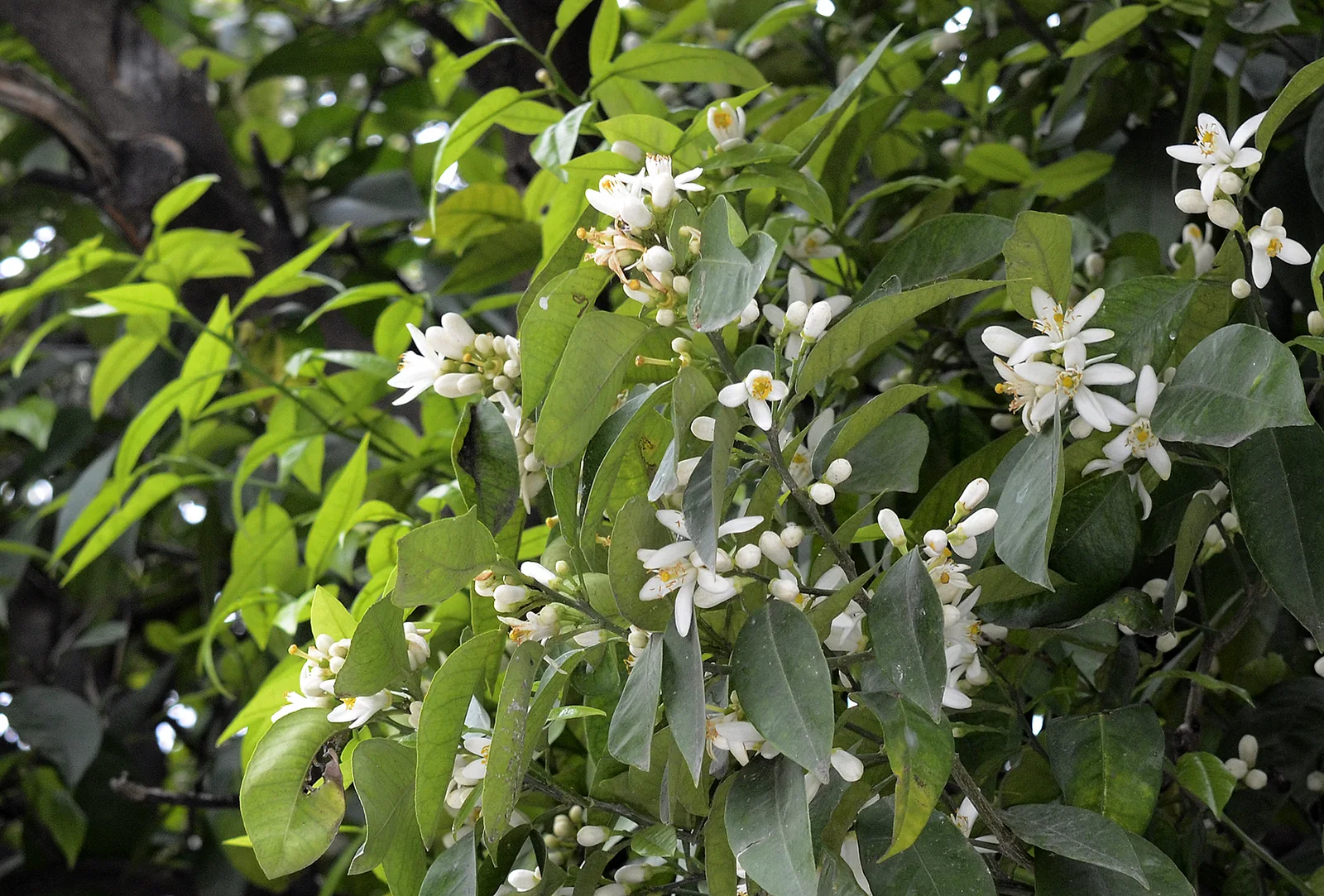
Say the words “orange scent” and most of us reach for the same mental picture: peel twisted over a drink, a burst of fresh juice, that bright spray released when the skin of the fruit breaks. But an orange tree has other stories to tell. Some begin before the fruit has even formed.
Neroli is one of them. In its traditional natural-material sense, it comes from a flower rather than oil pressed from an orange peel. That is why neroli can suggest both white flowers and citrus without smelling simply like orange juice [1][2].
A white blossom, an unexpected name
Natural neroli essential oil is generally produced by steam-distilling the blossoms of the bitter orange tree (Citrus aurantium). Perfumers often describe the result as airy, green, floral and citrus-bright. These are useful sensory descriptions rather than a guarantee that every finished perfume containing a neroli note will smell identical [1][3].
Bitter orange is not a catch-all name for the sweet eating oranges found in a supermarket. In perfumery the bitter orange tree is particularly interesting because its different parts, processed in different ways, offer more than one aromatic material [1][2].
Calling neroli merely “orange” leaves out the most interesting point. It sits where floral and citrus vocabularies meet.
One tree, several fragrances
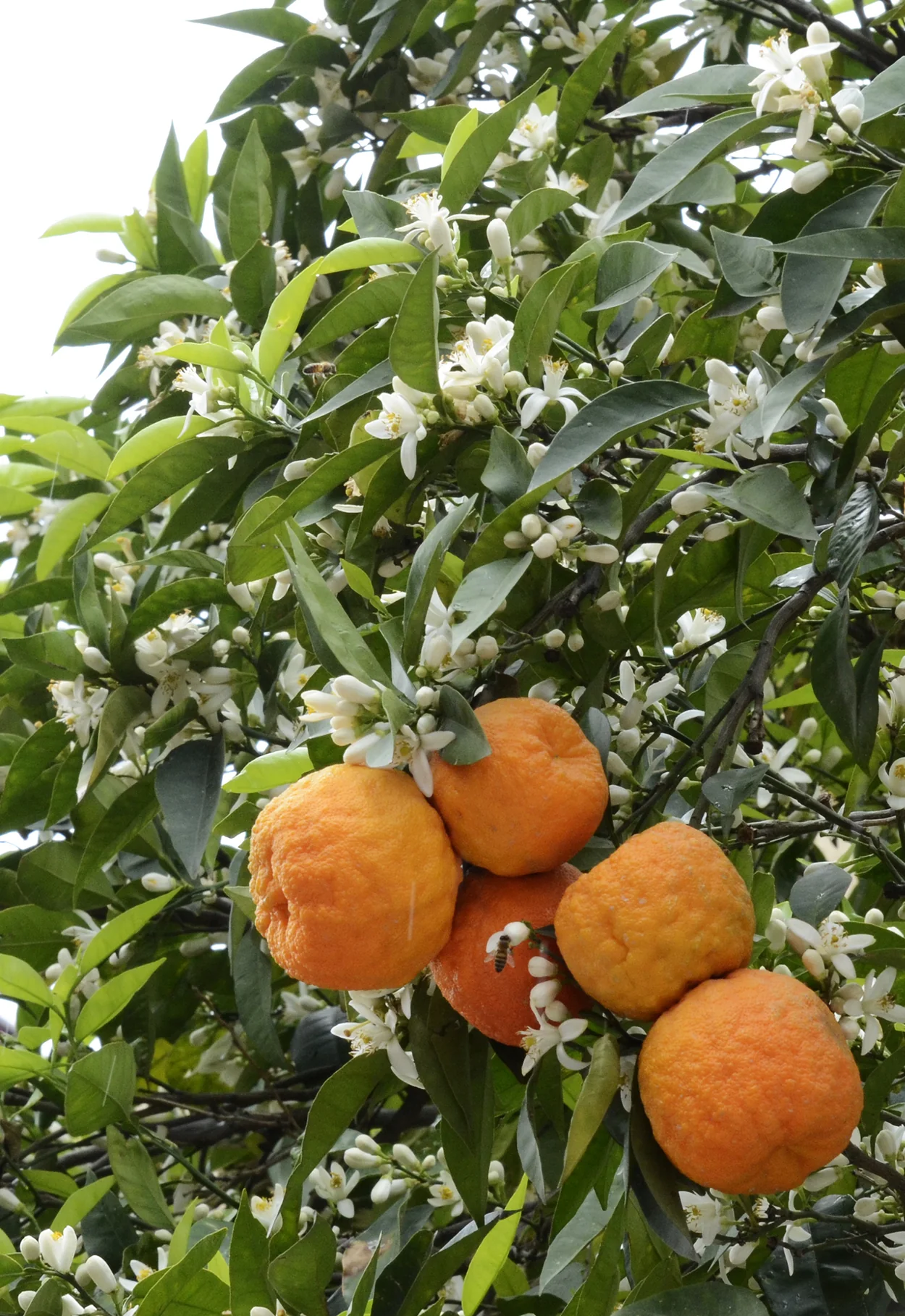
Four names often appear close together on perfume descriptions: neroli, orange blossom, petitgrain and bitter orange. They should not automatically be read as synonyms.
Neroli traditionally refers to steam-distilled essential oil from bitter orange blossoms. Its profile is often described as open, green and sparkling, with a light white-floral character.
Orange blossom absolute comes from flowers too, but through solvent extraction rather than steam distillation. Ingredient references commonly describe it as richer, sweeter and more enveloping. Neither description is a fixed law: extraction details and material quality matter [1][2].
Petitgrain comes from the leaves and young twigs, usually distilled to give a greener, woodier angle. Bitter orange oil, also called bigarade in some perfumery contexts, is associated with oil from the fruit's peel and a more immediately zesty character [1][4].
These differences do not rank one material above another. They let us read a note list more intelligently. A word that sounds like “orange” might point towards a flower, leaf, twig or peel.

What the process takes from the flower
We often judge a flower by how delicate its petals look. Its scent is less straightforward. What reaches our nose depends on aromatic molecules, their proportions and the way a material has been prepared.
A scientific review of Citrus aurantium describes how distillation produces both an essential oil and a fragrant water called a hydrosol, while orange blossom absolute involves a different extraction process. This also explains why orange blossom water used in food or cosmetics is not interchangeable with neroli oil or orange blossom absolute [3].
A familiar ingredient name can hide a long sequence of choices: which part of a tree is collected, when it is handled and how its aromatic material is recovered. Nor is “natural” an automatic measure of quality or safety. The composition and intended use of the finished fragrance matter just as much.
Does “neroli” on a perfume note list prove real neroli oil was used?
Not necessarily. A note list communicates the character of a fragrance; it is not the same as its formula, an ingredients declaration or a supplier's traceability record. The note may be represented by natural neroli oil, other aromatic materials evoking neroli, or an accord built from several components. Only verifiable manufacturer or formulation evidence can establish what was actually used.
ZCONY's confirmed note structure for Velour Rose offers a useful example: Neroli and Limonene appear in the top notes, followed by Rose and Lily in the heart, then Musk, Ambergris and Woody notes in the base [5]. This is a statement about the fragrance's disclosed olfactory structure. It does not establish the quantity or origin of natural neroli oil, nor prove how it performs on everyone's skin.
What makes the structure interesting is the sequence it invites us to explore: the luminous suggestion of orange blossom before rose and lily become central, with a different texture from the musk and woods later on. The description is a starting point for smelling, not a substitute for it.
Ask a different question next time
The next time someone describes a fragrance as citrus, try asking which part of the tree? A sharp freshness reminiscent of newly cut peel is not quite the same idea as the freshness of a white blossom, or the green scent suggested by leaves and twigs.
A paper tester can help you shortlist what you enjoy before trying a fragrance on suitable skin. You need not identify every molecule. Noticing whether you respond to peel, fruit, blossom or foliage is already a more interesting way to discover a fragrance.
Neroli does not make the orange tree into something other than itself. It simply reminds us that one tree can speak several languages of scent.


