Resin / Time / Character
Before It Touched Your Skin, It Was Tree Resin
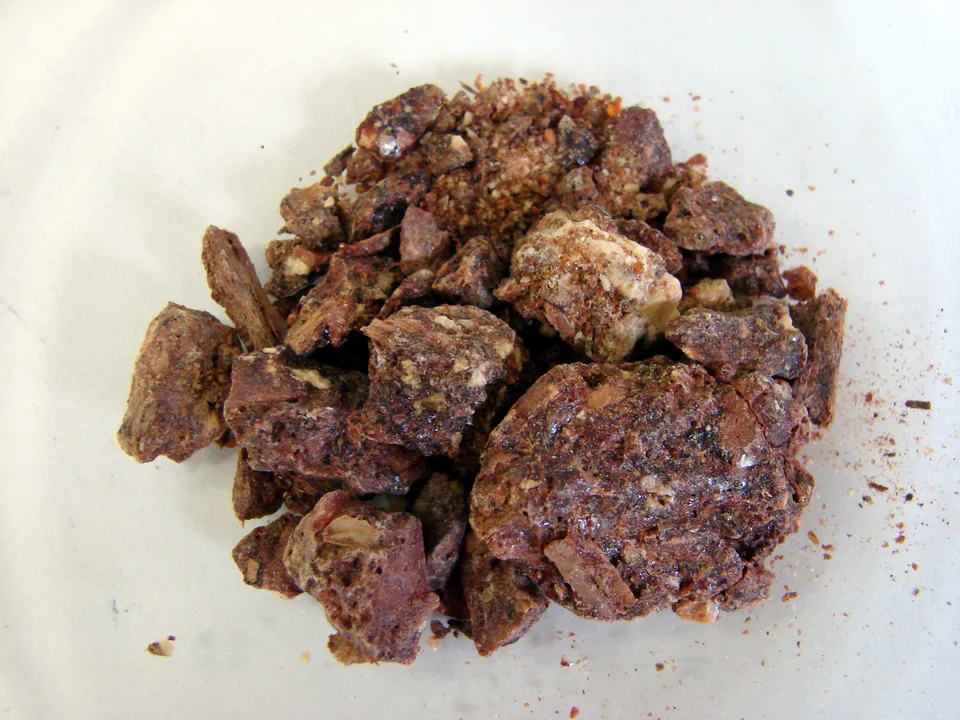
We know what we expect from a flower. Put a rose on a table and most of us have some idea of how it might smell. A citrus peel promises brightness; a piece of wood suggests something drier, quieter and more grounded.
Now place a small, uneven lump of pale amber-coloured material beside them. It could be mistaken for hardened sugar, a rough piece of stone or something discarded by the forest. Few people would immediately identify it as one of the materials that gives fine fragrance its distinctive warmth.
This is the world of Siam benzoin, an aromatic resin known in Thai as kamyan Siam. Its scent is often described as balsamic, softly sweet, resinous and reminiscent of vanilla — but the comparison with vanilla only begins to explain it. Beneath the sweetness there can be a dry, gently spiced quality and a sense of depth that has little in common with a conventional dessert fragrance.
What makes benzoin compelling isn't simply that it smells beautiful. It is where it comes from, the care involved in obtaining it, and the way a perfumer can use it to make other materials feel more complete.
Its journey begins not with a blossom, but with an incision in the bark of a tree.
A fragrance material formed at the bark
Benzoin is an aromatic resin obtained from trees in the Styrax genus. The material sold as Siam benzoin is closely associated with Styrax tonkinensis, a species found in parts of mainland Southeast Asia.
Unlike rose petals or citrus peels, this resin isn't gathered by picking a ripe or fragrant part of the plant. Harvesters make controlled cuts in the bark, encouraging the tree to produce resin in response. The fresh exudate may appear pale; over time, exposure to air and the drying process change its colour and texture until it forms irregular hardened pieces.
In the trade, these pieces are sometimes called benzoin tears. The poetic name refers to their form, not to any literal feeling attributed to the tree.
This is a material governed by human timing as well as botanical biology. A study of benzoin tapping in Laos by the UN Food and Agriculture Organization describes the practical choices involved in making cuts, waiting for resin formation and collecting it. Givaudan, a major fragrance-ingredient producer, describes a sourcing model in which Styrax tonkinensis is grown for years before harvesters can obtain resin of the desired quality.
A perfume bottle rarely makes those stages visible. Yet the material inside it may carry a long sequence of decisions: where the trees grow, how they are tended, when they are tapped, how the hardened resin is collected and how it is sorted.
Natural origin alone is not a guarantee of responsible harvesting. Excessive tapping can harm trees, and supply-chain quality depends on management and traceability. The real achievement lies in combining the sensory qualities of a botanical material with good sourcing practice — not simply placing the word “natural” on a label.
From rough resin to the perfumer's palette
Freshly collected resin is not the same as a finished perfumery ingredient.
After harvesting, benzoin is cleaned and sorted. It can then be processed into a resinoid, a concentrated aromatic material obtained by extraction. Producers may employ different methods. Givaudan describes ethanolic extraction for one of its Laos benzoin products; dsm-firmenich also lists a supercritical-fluid extract produced using pressurised carbon dioxide.
Those methods matter because they help determine the character and practical handling of the resulting ingredient. They do not mean that every benzoin extract is identical, or that all perfume houses use the same grade.
Nor does a perfumer simply drop a raw piece of resin into a fragrance bottle. A finished scent depends on a carefully selected material, its concentration, the surrounding ingredients and the balance of the complete formula.
Consider the difference between a violin playing alone and a violin sitting inside an orchestra. The instrument hasn't lost its identity, but its effect changes through the relationships around it.
Benzoin can behave in a comparable way. Its warm, balsamic character may be conspicuous in one composition and almost invisible in another. Even when it doesn't announce itself by name, it may contribute to the sense that the floral, woody, spicy or ambery elements belong together.
There is a distinction here that matters more than any grand claim about the price of an ingredient: the quality of a material and the quality of the composition are related, but they are not the same thing.

Why a tree resin can smell a little like vanilla
The sensory surprise of Siam benzoin is its softness.
Descriptions from established perfumery suppliers repeatedly mention warm balsamic facets, vanilla-like sweetness, and sometimes almond, caramel or subtle cinnamic nuances. The exact impression varies with the botanical source, extraction and individual batch.
In perfumery language, balsamic means a rounded, resin-like warmth and sweetness. It is not a reference to balsamic vinegar.
Why should something derived from tree bark suggest vanilla at all?
Benzoin contains a complex mixture of aromatic constituents. Chemical studies of Siam and Sumatra benzoin have identified differences in their composition, and certain constituents contribute to the recognisable sweet-resinous profile. The resemblance is the product of chemistry, not because vanilla has been added to the tree.
And although benzoin may recall vanilla, benzoin is not simply vanilla under another name.
Imagine an old wooden room warmed by late-afternoon light. There is softness in the atmosphere, but it isn't the sweetness of a freshly iced cake. Something slightly dry and resinous keeps it from becoming edible or playful. That is one way to picture the impression of benzoin, although not everyone will interpret it in the same way.
Used thoughtfully, this material can give a floral composition greater body, make woody elements feel more inviting, or introduce a softer side to an ambery structure.
It is an aromatic material with a considerable range — provided someone knows how to work with it.
The geography hidden in the word “Siam”
The name Siam benzoin carries a strong association with Thailand. It would be easy to assume that every piece of resin bearing that name must have been harvested in the country once known as Siam.
That would be an oversimplification.
Givaudan explains that the designation is linked to historic trade through Bangkok. Its own example of Siam benzoin sourcing is associated with Laos, while Styrax tonkinensis also occurs elsewhere in mainland Southeast Asia. The botanical material, the commercial name and the country of a particular harvested batch therefore need to be distinguished.
This makes the story more interesting, not less.
Trade names can preserve traces of old routes and regional exchange. They can connect a raw material with a port, a market or an era without establishing the origin of every shipment that passes under that name.
Siam benzoin belongs to a larger story of plants, growers, merchants and skilled processors across Southeast Asia. Telling that story carefully allows a fragrance publication to explore regional culture without claiming that every natural material in the region belongs to a single national tradition.
For any specific perfume, a precise sourcing claim would require information about the ingredient actually used. The word Siam on its own cannot provide that proof.
Valuable does not have to mean “the most expensive”
Luxury fragrance often comes with a familiar set of promises: rare, precious, exceptional, costly. Repeated often enough, those words become difficult to distinguish from one another.
Siam benzoin offers more concrete ways to think about value.
There is time: years of growth and a harvesting process that cannot simply be rushed without consequences.
There is skill: the decisions involved in tapping, collecting, cleaning and preparing the material.
There is sensory complexity: a natural resin may offer sweetness, depth, warmth and texture in a single aromatic profile.
And there is compositional purpose: an ingredient can become valuable because of what it allows the entire perfume to express.
Research has described benzoin as a fragrance material with fixative applications, but that shouldn't be converted into a promise that any perfume containing it will automatically last longer. Performance depends on the complete formula, the concentration, the wearer and the conditions in which it is used.
Just as importantly, a natural extract does not automatically outperform a carefully created synthetic ingredient. Modern perfumery uses both, sometimes in the same composition. The International Fragrance Association describes fragrance creation as a practice that brings natural materials, synthetic molecules and skilled composition together.
What deserves attention is the care of selection and the coherence of the result.
The soft side of a strong fragrance
It is tempting to think that a fragrance meant to feel strong should be built entirely from forceful ingredients.
But too much force, without contrast, can flatten character.
Think of tailoring. A sharply structured jacket may be softened by the way the fabric moves; a serious silhouette becomes more human through a carefully judged detail. Its appeal comes from control, not sheer severity.
Warm resin can play a comparable part in an olfactory composition. Set against dry woods or an ambery accord, benzoin's softer character can create contrast. With florals it may bring depth. With spiced or darker elements it can introduce warmth without removing the structure beneath them.
This is where fragrance begins to intersect with personal style.
A scent might strike one person as self-assured, another as comforting, and someone else as too warm for their taste. Those are interpretations, influenced by personal experience and cultural context. A perfume cannot be shown to change someone's underlying personality simply because its notes are described as confident.
But a person can choose a scent as deliberately as they choose a piece of clothing. That choice can express a mood or an aspect of identity: understated, decisive, playful, composed, or something less easily named.
Quiet confidence, in this sense, is not a clinical outcome. It is a creative description of how warmth and structure can coexist in a fragrance.

Inside ZCONY's Polo Noir
For ZCONY, a Thai fragrance brand with a stated emphasis on thoughtful scent design and the use of natural aromatic materials, this conversation has a tangible connection to a perfume in its existing retail collection: Polo Noir.
ZCONY's brand owner confirms that Polo Noir uses genuine natural-resin-derived Siam benzoin. It is not merely a decorative reference to tree resin in the product story.
The fragrance's current olfactory direction also brings together the names Amber, Oriental Oud, Vetiver and Ebony Wood. Those descriptions suggest a composition concerned with warmth and structure. The meaningful question, however, is not how imposing its list of notes looks on paper. It is how those elements are arranged into something that feels coherent on skin.
Here, Siam benzoin offers a useful way to understand the design intention. Its natural balsamic warmth creates the possibility of softness alongside darker, drier facets associated with woods and vetiver.
That does not mean a note pyramid can tell us exactly how any finished perfume smells, how long it lasts, or how strongly it projects. Only a real wearing can answer those questions for a particular person.
What it can reveal is a point of view: material choice is part of fragrance design, and a natural ingredient can be selected for what it contributes to the character of a composition.
ZCONY has also confirmed that some ingredients in its fragrance business are sourced in Thailand. That broader fact should not be confused with a claim that the specific Siam benzoin batch in Polo Noir was harvested in Thailand; its precise origin has not been publicly established.
The brand's owner reports positive conversations with fragrance-knowledgeable visitors from abroad, including comments about its materials and the considered quality of its scents. Those conversations offer useful qualitative feedback. They are not the same as an independent international award, a consumer survey or a claim that ZCONY is universally recognised.
The ambition behind the design is nevertheless clear: to compose perfumes that have a distinct identity and can make sense to people beyond one language or cultural setting, without needing to reproduce the familiar visual or olfactory signatures of another house.
Wearing character, rather than borrowing one
“Personality-enhancing” is an appealing way to describe perfume, but it can suggest a transformation that fragrance has no reason to promise.
A scent needn't turn you into someone else to be meaningful.
The person who prefers clean, understated clothing might choose something warm and structurally clear. Someone whose wardrobe is more expressive might enjoy the tension between a soft resin and a darker wood. Another wearer might find the same fragrance too rich — and choose something lighter instead.
None of those responses invalidates the perfume.
In a warm, humid climate, rich notes can be perceived differently according to temperature, how much is applied and how the fragrance develops over time. A considered trial on skin is more revealing than a split-second sniff or a description alone.
It is also more useful than deciding that resin, oud or wood belongs to one gender. A fragrance's profile can suggest a mood, but the wearer gives it context.
The promise worth keeping is smaller and more credible than a dramatic transformation: a well-composed fragrance may help someone express something they already recognise about themselves.
What a small piece of resin can teach us
Return to the original material: a rough, pale-amber fragment formed on a tree.
It does not look like a polished luxury object. That is part of what makes its journey so compelling.
Behind the finished scent are people who understand the plant, the conditions of harvest and the process of extraction. Behind the use of that extract is a different craft — selecting proportions and contrasts until the materials begin to express a coherent character.
The value of Siam benzoin is not that it can be proclaimed the rarest or the most expensive resin. Its value lies in its recognisable qualities and in the skill required to place those qualities well.
In Polo Noir, ZCONY has chosen to bring genuine natural Siam benzoin into the language of the fragrance. It is an invitation to notice a side of perfumery that is often invisible on the shelf: how an unexpectedly soft material can contribute to a composition with depth and presence.
The next time a perfume strikes you as warm yet composed, it may be worth asking where that impression began.
Not every remarkable scent starts in a garden full of flowers. Some begin with a tree, a small incision in its bark, and years of quiet work before anyone ever wears the result.
Discover the fragrance in person
Polo Noir is available to experience at ZCONY's retail location in Terminal 21 Pattaya, according to the brand's current product information. The brand has not yet confirmed a live individual e-commerce product page for this fragrance, so this article intentionally does not invent a purchase link.
Editorial disclosure: This publication is connected with ZCONY and includes a clearly identified reference to one of the brand's fragrances.
Further reading
- Givaudan — Benzoin Powder Resinoid Laos
- dsm-firmenich — Benzoin Siam SFE
- FAO — Tapping Methods and Improvement
- Burger et al. (2016) — New Insights in the Chemical Composition of Benzoin Balsams
- IFRA — How Is Fragrance Made?
ZCONY · POLO NOIR
From a material story to a scent on skin
Experience Polo Noir at ZCONY · Terminal 21 Pattaya
Retail location according to the brand. An individual online purchase page has not been verified.
This publication is connected with ZCONY and openly features the brand’s fragrance.
Photography & permissions
Resized, converted to WebP and cropped for layout. Adapted images retain their original license. Photographers do not endorse this article or product.
Benzoë sumatra1.JPG — Maša Sinreih in Valentina Vivod; balance correction: Grzegorz Wysocki · CC BY-SA 3.0. A Sumatra benzoin (Styrax benzoin) reference specimen, as identified by the image source. An illustration of resin form, not Siam benzoin or the Polo Noir ingredient batch.

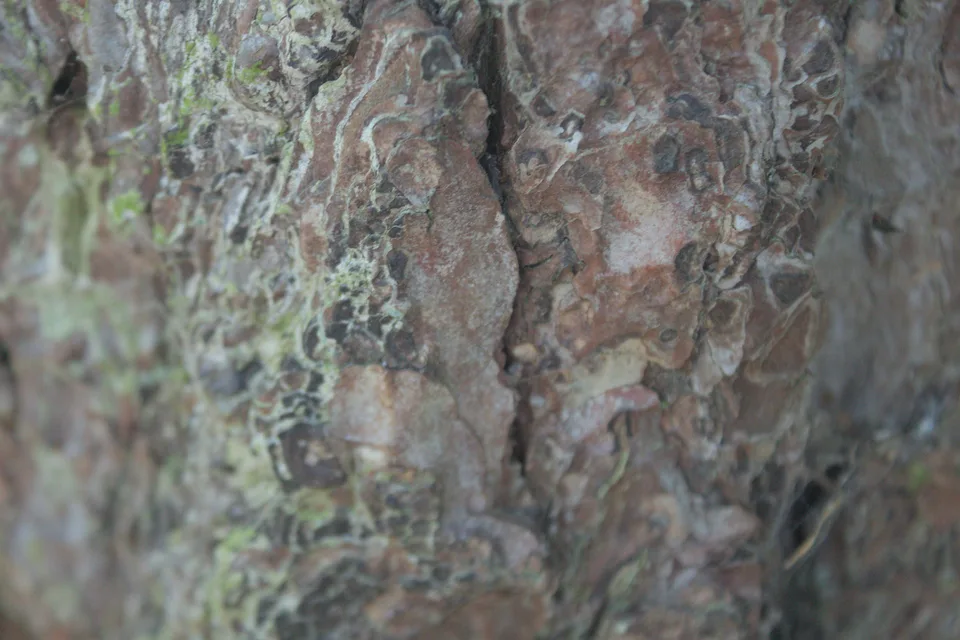
Close-up of bark - 16 June 2025.jpg — Aethonatic · CC0 1.0. Tree bark in the Peak District, England. An illustration of natural texture, not a Styrax tree or a benzoin harvest.
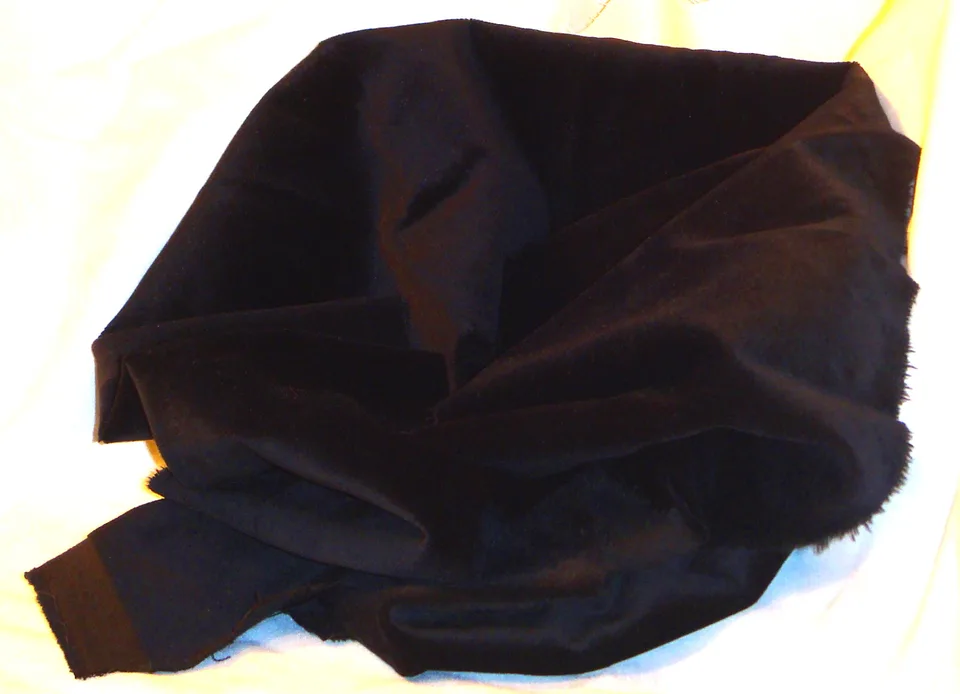
Black Cotton velvet.JPG — Amadscientist · CC BY-SA 3.0. Black cotton velvet: a tactile analogy for reading a scent's character, not a ZCONY product or material photograph.